

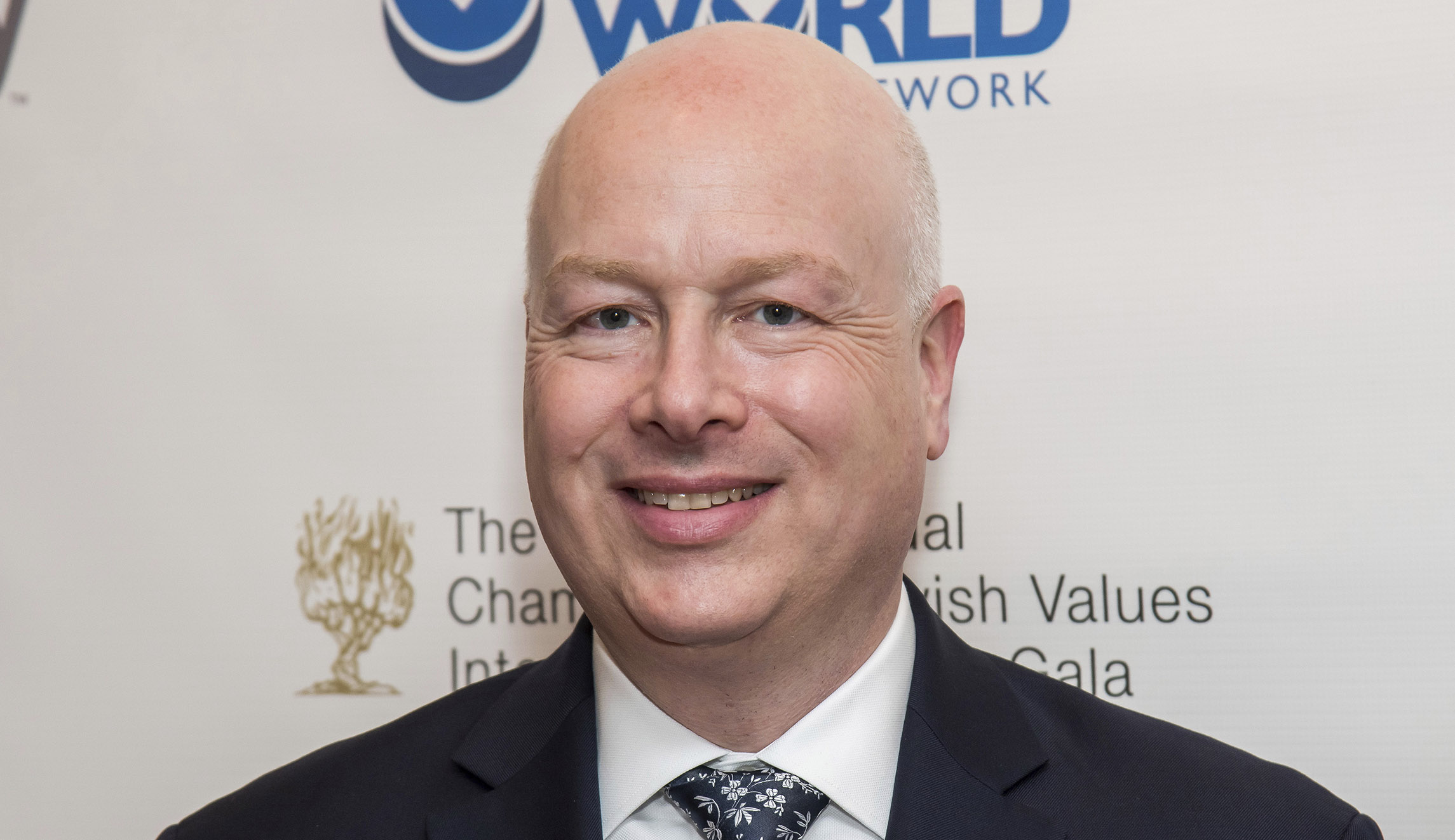
Palestinian leaders shouldn’t assume they have a “right” to establish a state with headquarters in East Jerusalem, one of President Trump’s top advisers told the United Nations Security Council.
“It is true that the PLO and the Palestinian Authority continue to assert that East Jerusalem must be a capital for the Palestinians,” Jason Greenblatt, Trump’s special representative for international negotiations, said during a Tuesday debate. “But let’s remember: An aspiration is not a right.”
Recommended Stories


Greenblatt cautioned against reading into that statement anything about the details of the administration’s much-delayed peace plan, although Trump son-in-law Jared Kushner has signaled that the proposal jettisons the “two-state solution” that has dominated previous efforts. But he spent much of his presentation jousting with the “international consensus” about the conflict and rebuking them for failing to push Palestinian leaders into negotiations.
“International consensus is too often nothing more than a mask for inaction,” said Greenblatt. “This conflict is also not going to be resolved by reference to ‘international law’ when such law is inconclusive . . . So we can spend years and years arguing what the law is and whether it is enforceable, and prolong the ongoing suffering. Or we could acknowledge the futility of that approach.”
Those comments drew a rebuke from leading western European allies. “For us, international law is not menu a la carte,” said Christoph Heusgen, the German ambassador to the U.N., said during the meeting. “There are other instances where U.S. representatives here insist on international law, insist on the implementation of U.N. Security Council resolutions, for instance on North Korea.”
Greenblatt argued, however, that the U.N. resolutions pertaining to Israel are ambiguous and inconclusive — compromise documents that do not resolve of the controversies that have kept the two sides at an impasse for decades.
“A comprehensive and lasting peace will not be created by fiat of international law or by these heavily wordsmithed, unclear resolutions,” he said.
Those comments came as Germany and other Western allies condemned Israel’s demolition of buildings in the West Bank, in areas where Palestinian authorities maintain jurisdiction under the Oslo Accords. “The practice causes unnecessary suffering to ordinary Palestinians and is harmful to the peace process,” Germany, the United Kingdom, France, and Spain said in a joint statement Tuesday.
Palestinian leaders are to “aspire to have a capital in East Jerusalem, with creative solutions that attempt to respect all three religions that cherish this incredible city,” Greenblatt affirmed. But he maintained that Israel’s critics are undermining the prospect of successful negotiations by leading Palestinian leaders to believe there is international support for a hardline position.
“Those who have weaponized the term ‘occupation’ in order to criticize Israel are doing nothing to promote a resolution to this conflict,” he said. “We call on the leadership of the PLO and the PA to put aside blanket rejections of a plan they have not even seen, and to show a willingness to engage in a good-faith manner, a meaningful dialogue with Israel.”
But Greenblatt couldn’t say when the administration will unveil the peace proposal. Kushner intended to release the deal in the wake of Israel’s April elections, but Prime Minister Benjamin Netanyahu’s inability to strike a power-sharing agreement with rival factions resulted in the Israeli legislature voting to schedule new elections — a political process that could push Kushner’s unveiling of the deal back to November.
“I ask all of you to reserve judgment until we publish, and you read, the 60 or so pages that detail what peace could look like,” he said. “Achieving that vision will require difficult compromises by both parties, if they are willing to make such compromises. But we believe both sides will gain far more than they give.”
