

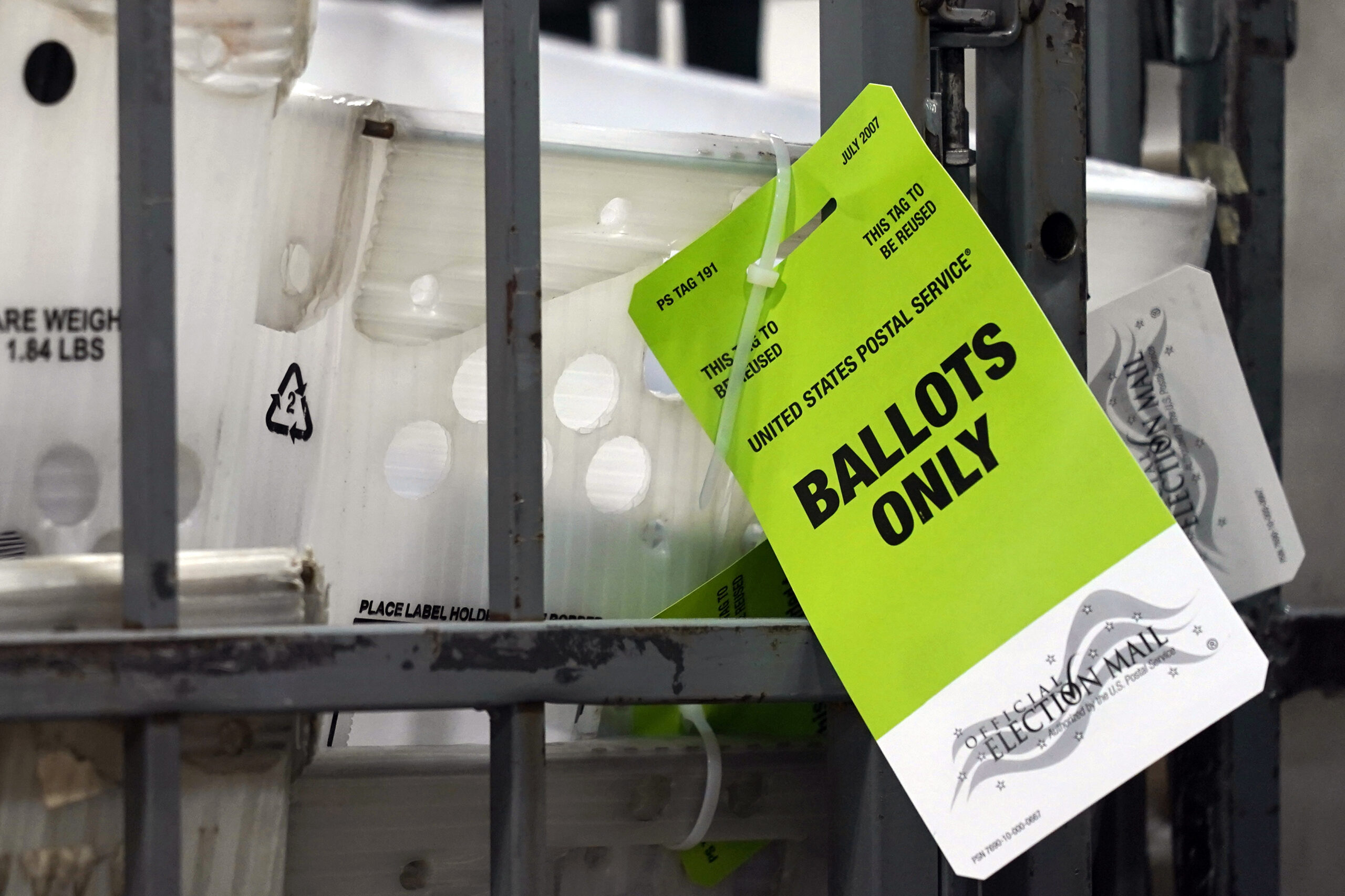
Nearly 7,500 Floridians have cast ballots via the mail in the Nov. 3 election, the Florida Division of Elections (FDOE) reported Monday afternoon.
Early mail-in voting began in Florida on Sept. 24, with state elections officials anticipating a deluge of mailed-in votes that could double the 2.7 million cast via the mail in 2016.
Recommended Stories


Of Florida’s 14 million eligible voters, more than 2.3 million Democrats, 1.6 million Republicans and 1.1 million unaffiliated voters want ballots mailed to them, FDOE said.
Florida voters have until Oct. 5 to register to vote and until Oct. 24 to request a vote-by-mail ballot. In-person early voting begins Oct. 19 in some counties and statewide Oct. 24.
With Election Day 36 days away, legal haggling over name placement on the ballot continues.
The Democratic National Committee, Democratic Governors Association, Democratic Legislative Campaign Committee and Priorities USA filed a lawsuit in 2018, claiming a decades-old state law that requires candidates from the governor’s party be listed first on the ballot was unconstitutional.
The law was adopted in 1951, during an 80-year span when Democrat governors reigned until 1967, with the exception of Prohibition Party Gov. Cary Hardee’s 1921-25 term. Republicans have occupied the governor’s mansion since 2000.
U.S. District Judge Mark Walker issued an injunction last November, prohibiting the state from following the law. A three-judge 11th Circuit panel tossed Walker’s order and the lawsuit in April.
Another three-judge panel rejected a revised challenge Sept. 3, claiming, among other reasons, it is a “political question” best resolved by the political process.
Pointing to the “exceptional importance” of the case, lawyers for the plaintiffs filed petitions Thursday seeking an expedited full hearing before the 11th Circuit.
In their petition, attorneys maintained the panel erred when it ruled the case involves a “political question” they cannot address.
Chief Judge William Pryor and Justice Joel Luck, a former Florida Supreme Court justice, wrote the majority opinion. Judge Jill Pryor dissented, writing the ruling renders “un-reviewable constitutional claims that can and should be resolved by federal courts.”
“These are grave mistakes that portend dark days for the Constitution and the fundamental rights it guarantees,” she wrote. “I hope our en banc court or the Supreme Court will step in to correct the majority’s mistakes and preserve the federal judiciary’s vital role in protecting constitutional rights in the context of elections.”
Plaintiffs contend Pryor is correct, arguing the U.S. Supreme Court on only “exceedingly rare occasions” has determined “political questions” are beyond federal judges’ jurisprudence.
“For decades, federal courts have considered ballot order challenges without expressing any concerns about their ability to adjudicate them,” the petition said.
The organizations said the law is unconstitutional and point to “primacy effect” raised by Walker in his November ruling.
“By systematically awarding a statistically significant advantage to the candidates of the party in power, Florida’s ballot order scheme takes a side in partisan elections,” Walker wrote, adding the U.S. Constitution does not allow “a state to put its thumb on the scale and award an electoral advantage to the party in power.”
Pryor, in her dissent, also raised “primary effect.”
“I believe the questions of Florida law we must resolve to decide traceability and redressability – in ordering candidates’ names on ballots, what role does the secretary of state play and does she exercise sufficient authority over county election supervisors? – are considerably harder than the majority makes them out to be,” she wrote.
Its uncertain when – or if – the 11th Circuit will respond the petition.
