

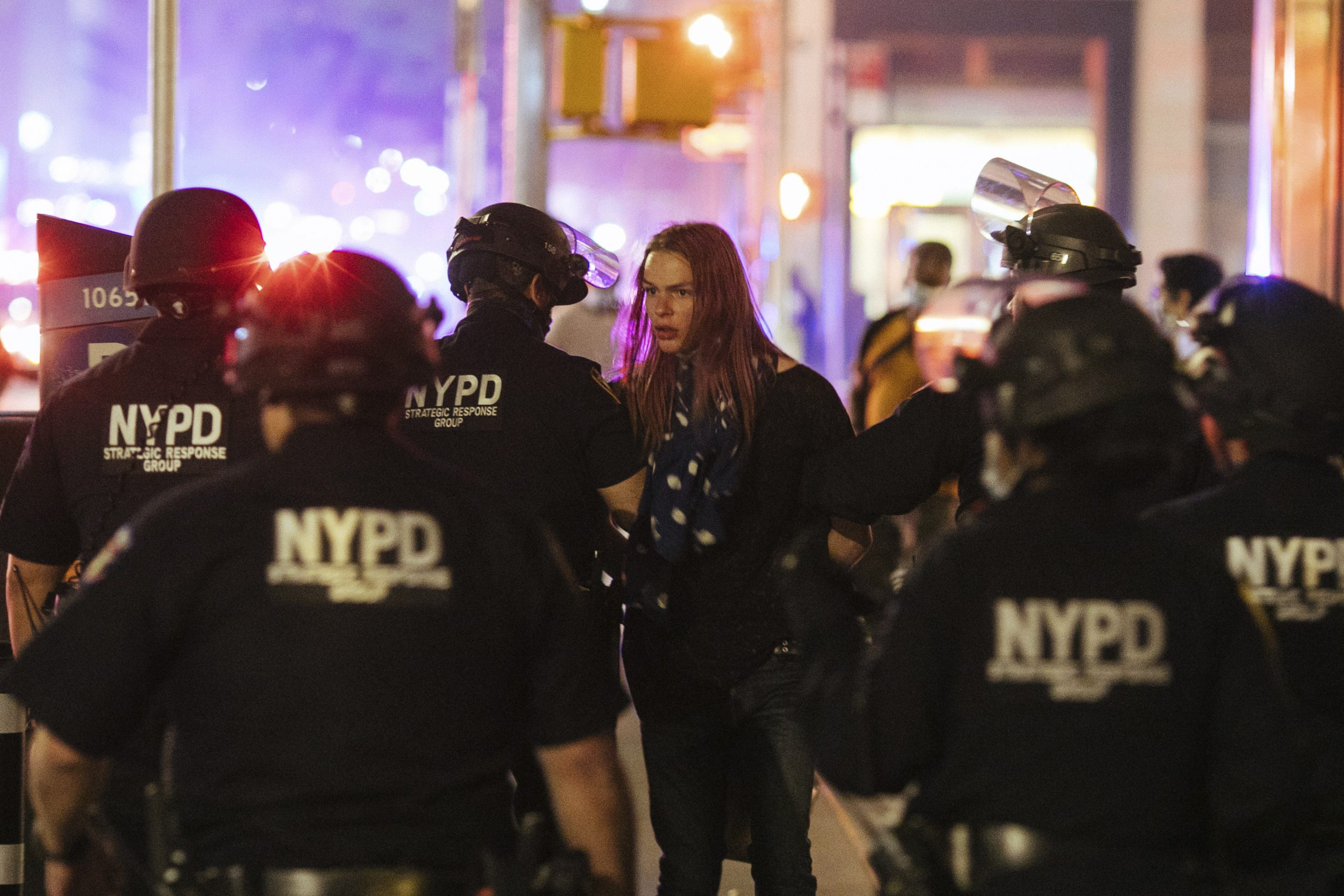
Following the death of George Floyd in police custody, there’s been bipartisan consensus on the need for police reform. But police unions are standing in the way.
Police unions fight for collective bargaining agreements that often allow police departments to bury complaints, limit investigations, destroy records of misconduct, and even mandate excessive appeals for offending officers. As a result, it’s difficult to hold violent officers accountable.
Recommended Stories


For example, in Floyd’s case, it was revealed that the involved officer had more than a dozen misconduct complaints against him prior to Floyd’s death. And that’s just one of many such cases.
In Chicago, 17-year-old Laquan McDonald was shot by police officer Jason Van Dyke, who had faced multiple complaints prior to McDonald’s death. Officer Ryan Pownell, who is currently on trial for the alleged murder of David Jones during a traffic stop in Philidelphia, had 15 misconduct complaints made against him over five years. Another officer who shot and killed 12-year-old Tamir Rice in Cleveland had resigned from his previous department before they had the chance to fire him for being deemed unfit to serve. He did not have to disclose his reason for leaving his former job when he joined the Cleveland police department.
Similarly, in New York City, we now know that Officer Daniel Pantaleo had seven misconduct cases against him and multiple complaints prior to his involvement in the death of Eric Garner. Why weren’t any of these officers removed from the line of duty earlier? Evidence suggests their police union contracts are to blame.
Police unions consistently fight for collective bargaining agreements that make it hard to hold bad officers accountable and keep disciplinary records hidden from the public. It’s no wonder a recent survey from the Center for Union Facts found that more than 60% of respondents believe police unions should have their power reduced.
For one, many collective bargaining agreements include lengthy appeals processes for officers accused of misconduct. This means a “stunningly high percentage” of officers that are fired for misconduct actually end up getting rehired, according to an investigation by the Washington Post. In a study of 656 police union contracts, the median department offered officers four layers of appellate review in disciplinary cases, often followed by another appeal to a third-party arbitrator. In fact, more than half of departments studied even allowed the accused some input in selecting the arbitrator.
Aside from making it difficult to weed out bad police, 88% of collective bargaining agreements, according to one study, “contained at least one provision that could thwart legitimate discipline.” That included limiting “officer interrogations after alleged misconduct,” mandating “the destruction of disciplinary records,” and limiting “the length of internal investigations.”
If a civilian were subject to similar rules, police officers would undoubtedly be up in arms. But their unions don’t seem to mind the double standard. Many even have a history of fighting laws that would promote transparency in their ranks. In California, a 2018 law to increase transparency for police officer records was immediately met with a fight from the state’s police unions. Several departments even responded by shredding years of records, including police shooting investigations.
Until very recently in New York state, police unions frequently fought against any changes to Section 50-A of the New York civil rights law, which kept police disciplinary and personnel records shrouded in secrecy. Police union leaders continue to argue that hidden records help keep police safe, though there’s little evidence to support this claim. Additionally, almost 70% of people believe it’s more important to make it easier to get bad officers off the force than to protect all officers.
One bill before Congress, the Public Safety Employer-Employee Cooperation Act, would only exacerbate the issue by forcing state and local governments to engage in collective bargaining with public safety employees — including police officers. If passed, it would only drive more police departments into potentially counterproductive collective bargaining agreements with no pathway to achieving much-needed reform.
Thankfully, there’s a better option. The JUSTICE Act, currently being considered by Congress, would be an important first step toward shining a spotlight on police misconduct. After all, not all officers are bad apples. But it shouldn’t be so hard to separate the good from the rotten.
Charlyce Bozzello is the communications director at the Center for Union Facts.
