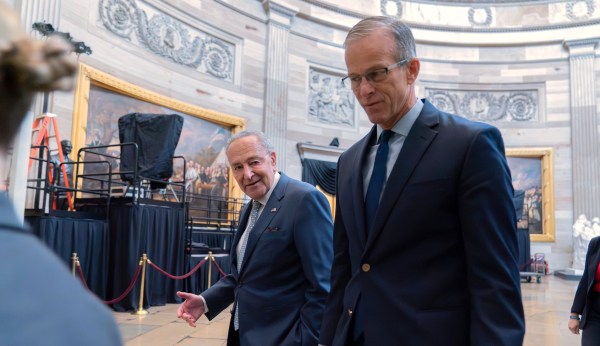
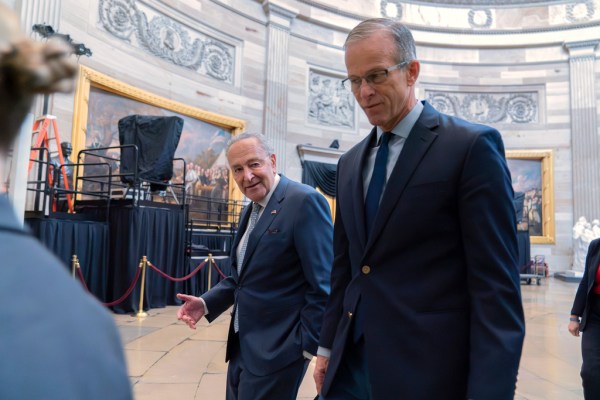
Sen. John Thune (R-SD) is heading into November without a concrete threat to his leadership of Senate Republicans or even talk of a token challenge from anyone in his conference.
That does not mean Thune is out of the woods entirely, however, as his colleagues wait to see the outcome of the midterm elections and whether they can keep their Senate majority in what is expected to be a difficult year for Republicans.
Stay informed.Stay ahead.
Join Washington Examiner for unlimited access to the news, analysis, and commentary that matter most.
Already a member? Log in
The conventional wisdom is that if Republicans keep their majority, Thune is far less likely to draw a challenger, and so far, the senators most likely to vote against him are not planning the sort of contested race they orchestrated for Sen. Mitch McConnell (R-KY) in 2022.
The most likely Republican to challenge Thune, Sen. Rick Scott (R-FL), has definitively ruled it out, replying with a “been there, done that” on Thursday. He and other senators aligned with him told the Washington Examiner that they haven’t discussed a challenge this fall or heard of anyone who has.
“I haven’t heard of any opposition,” said Sen. Rand Paul (R-KY).
The alternate scenario is that Republicans suffer an electoral wipeout and Thune is blamed for the loss by his critics. He enjoys wide support within the GOP conference and is leading them through political headwinds that are out of his control, but Thune has faced complaints that he did not devote enough floor time to bills that address the high cost of living.
He’s also been plagued by the SAVE America Act and President Donald Trump’s insistence that GOP voters will stay home in November if the Senate does not pass it. Sen. Mike Lee (R-UT), the election integrity bill’s author, has been particularly critical of the chamber’s inaction and initially opposed Thune before he ascended to GOP leader in 2024.
THUNE BECOMES MAGA’S MIDTERM ‘FALL GUY’ WITH VOTING BILL CRUSADE
Sen. Ron Johnson (R-WI), one of Lee’s Republican allies, told the Washington Examiner it’s not yet clear whether Thune will run for leader uncontested.
“You have to see what happens with the election,” Johnson said, taking his own name out of consideration yet warning that “things happen sometimes when you go from the majority to the minority.”
“Let’s hope that doesn’t happen,” he added.
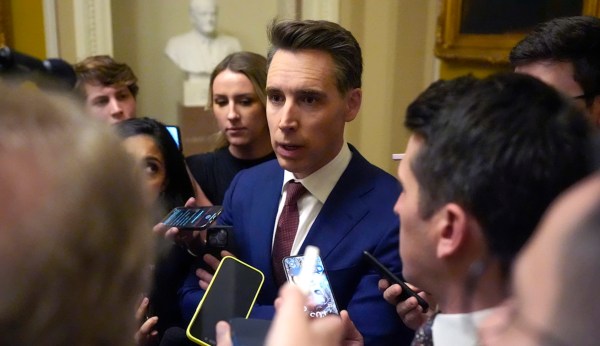
Sen. Josh Hawley (R-MO), who opposed McConnell four years ago, said “of course” the midterm elections will influence support for Thune. Scott would only say, “I know he’s worked hard,” when posed with the same question.
None would disclose whether they’ll support Thune for leader in a secret ballot that will take place shortly after the midterm elections, with Hawley calling the conversation “premature.” Scott previously said he wanted to see “who’s going to run.”
The speculation is taking place as polling shows Republicans teetering on the verge of losing control of one or both chambers of Congress, an outcome that would hand Democrats investigative powers and tie Trump’s hands for the final two years of his presidency.
In terms of the Senate, Republicans are no longer favorites to keep their majority due to a deteriorating political environment fueled by the war in Iran. The only saving grace is the fact that Democrats are woefully behind in terms of fundraising and won’t be able to fully capitalize on an expanding midterm map.
Thune, for his part, is taking the leadership chatter in good humor, laughing that he has “no idea” if a challenge will emerge in November.
“I never try and predict things like that,” he said.
Thune has, however, taken seriously the complaints leveled against McConnell during his nearly two decades leading the GOP conference with an iron fist. In fact, Thune’s leadership style is collaborative to the point that it’s led to gripes that he entertains holdouts like Lee or Scott for too long.
Thune has also spent the last two years building a reservoir of goodwill that makes the idea of a serious leadership challenge difficult to imagine.
By the end of the cycle, Thune will have raised money for every incumbent up for reelection as well as every GOP nominee in a competitive state. That fundraising circuit will take him to a different state every week between now and the election, including a Thursday stop in Georgia on behalf of Rep. Mike Collins (R-GA).
From the standpoint of outside spending, Thune’s political machinery has raised more than $600 million this cycle, a war chest that Thune says has allowed Republicans to erect a “big wall around all of our candidates.”
He acknowledged the electoral challenge facing Republicans but argued that he’s done what he can to set his conference up for success in November, including on the candidate recruitment front.
“We’re doing everything we can to help,” Thune said. “At the end of the day, there are things you can’t control in politics. You try and control the things you can, and so that’s what we’re doing.”
The president has not made that job easy. Trump, who has intervened in internal elections before, has questioned whether Thune is truly a leader due to his reluctance to do away with the Senate filibuster, fixating on the SAVE America Act to the point that it’s overshadowed the legislative accomplishments Republicans did notch this Congress.
On the campaign trail, Republicans fear the war in Iran and a number of Trump’s endorsements are putting historically red states in play.
“I think he’s done the best he can,” Sen. John Cornyn (R-TX) said of Thune, “and I would look to the White House for who’s responsible for the outcome.”
RAND PAUL BACKS JAMES COMER FOR KENTUCKY GOVERNOR, SAYS ‘GOOD SHOT’ GOP WILL COALESCE
Trump decided to back nominee Ken Paxton in the Texas Senate primary despite pleas from Thune and other Senate Republicans who believed Cornyn, a four-term incumbent, stood a better chance of winning.
The president has responded by opening his wallet, funneling tens of millions into Texas and other competitive states through the No Going Back super PAC.