

Stalling under-construction offshore wind farms that are nearly complete and ready to plug into the grid will result in higher costs for consumers, the head of the primary utility trade association warned.
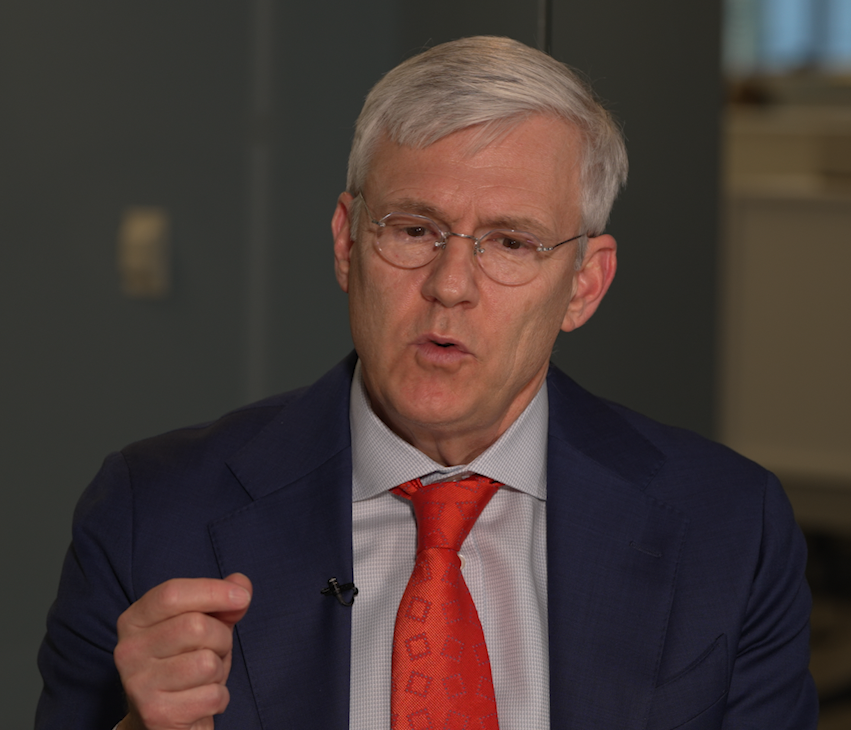
In an exclusive interview with the Washington Examiner, Edison Electric Institute CEO and president Drew Maloney supported an “all of the above” energy approach to arrest the rise in electricity prices that has accompanied growing demand from electrification, increased manufacturing, and artificial intelligence.
Maloney, who served at the Treasury Department during President Donald Trump’s first administration, said that utilities need as many electrons on the grid as possible and should use any available energy resource.
His remarks come as the Trump administration has sought to suppress the development of renewable energy sources such as wind and solar by imposing new regulatory hurdles on projects or threatening to revoke federal permits and leases issued under previous administrations.
Most recently, the Interior Department paused leases for five offshore wind farms under construction along the Atlantic coast, citing national security concerns. Some of the projects were expected to pump energy into the grid as early as this year.
All five projects have been granted permission in federal courts to resume construction. But Maloney offered a warning for the ripple effect project delays can have on consumers and their energy bills.
“Ultimately, it’s a cost that’s going to be borne by the customer,” Maloney said. “So if you’re investing $5, $6, $7 billion into a new gas facility, new wind, [or] new solar, and that gets stopped somewhere along the way, that’s going to be borne by the customer.”
He emphasized the need for project certainty, meaning that energy projects, regardless of the resource, are not at risk of having their federal permits stripped while under construction.
“I think that’s why you’re seeing a lot of support broadly in the industry, sort of for an all of the above strategy…we need the certainty, because once we start investing, it’s not fair to the investors. It’s not fair to the customers that we have these off-ramps during that time,” Maloney said.
Over the last year, the Trump administration has broken with many Republicans in publicly saying it is not in favor of an “all of the above” energy strategy.
Instead, officials such as Energy Secretary Chris Wright support a fossil-fuel-dominant approach, prioritizing reviving the aging coal industry and building out natural gas.
The administration is in favor of advanced technologies such as geothermal, fusion, and nuclear power, but has excluded wind and solar alternatives from its own definition of “energy.” The Trump administration has even said that the increased integration of wind and solar power supported by the Biden administration is a key driver of rising electricity costs.
However, utilities have been looking to incorporate renewable energy alternatives in their resource mix for years, Maloney told the Washington Examiner.
“The technology around each of those keeps getting better and better, just like the technology around natural gas keeps getting better and better,” he said, reiterating the need for “all of the above.”
“You look at a state like Iowa…a large percentage of their power comes from wind. Texas has a good mix of wind and solar,” Maloney continued. “But you need it all. And you see, like during a storm like this, you know, where we became very reliant on fossil fuel as sort of base load, you need that too. And we need more nuclear…we need as many electrons on the grid as possible right now.”
Earlier this week, the Edison Electric Institute released a study conducted by Charles River Associates that found the average electricity prices nationwide have soared, while rates have remained relatively stable in most states.
TRUMP UNVEILS PLAN TO SHIFT POWER COSTS TO AI DATA CENTERS
The report found that over the last five years, 34 states saw below-average electricity rate increases. And for those with higher rates, the report attributed those to wholesale price increase, wildfire spending, net metering programs, and other external drivers.
With the exception of some areas within the PJM Interconnection grid region, data centers were not a key driver behind higher electricity costs, the study found.
